

2025 Forensic Sciences Newsletter

Message from the Chair
Department Spotlights
Department Kudos
Retirements
Alumni Class Notes
Message from the Chair

Greetings to all of our alumni from the George Washington University Department of Forensic Sciences!
In this newsletter, you’ll read about some of the exciting developments happening in our department. We are thrilled to share that the department continues to grow and innovate in ways that strengthen our academic programs and enhance the student experience.
One of the most exciting updates is the launch of a brand-new Graduate Certificate Program in Latent Print Examination, designed to provide specialized training in this critical area of forensic science. This addition reflects our commitment to preparing students for the evolving needs of the field.
We’ve also made significant improvements to our facilities. Our students now have access to new spaces, including a fully equipped crime scene apartment for immersive CSI training and a student lounge where they can meet, study, collaborate and build lasting connections with their peers.
Our faculty continues to be the heart of our program, and we are delighted to welcome two new members to our team:
- Professor Jessica Cheng, who specializes in forensic molecular biology.
- Professor Lilian Barbosa, who brings expertise in forensic chemistry.
At the same time, we bid a fond farewell to two of our long-standing faculty members, Professor Walter F. Rowe and Professor Ira S. Lurie, who are retiring after years of dedicated service and invaluable contributions to the department. We are pleased to share that both will continue to support independent research projects for our students, ensuring their knowledge and mentorship remain part of our academic community.
Across the Columbian College of Arts & Sciences and the university, there are many exciting initiatives underway, and we encourage you to stay connected. Please also note that there are some fabulous alumni events on the horizon. We hope you’ll join us to reconnect with fellow graduates and celebrate the future of forensic science together.
Thank you so much for your continued support and involvement. Please stay in touch—we love hearing from you!
Sincerely,
Daniele Podini
Department Chair
Department Spotlights

Graduate Certificate in Latent Print Examination
GW’s online Graduate Certificate in Latent Print Examination, set to launch in fall 2026, is the first program of its kind in the United States. Designed for aspiring and transitioning forensic professionals, the one-year curriculum aligns with standards set by the Organization of Scientific Area Committees (OSAC). Students gain hands-on knowledge in fingerprint development, latent print comparison, digital imaging, photography and expert testimony. Coursework follows OSAC’s Standard for Friction Ridge Examination Training Program, ensuring students are as close as possible to casework ready upon completion.
Graduates will be prepared with the knowledge needed for the International Association for Identification’s certification exam and ready to advance in forensic science careers. This program also offers an excellent opportunity for crime scene investigators who are ready to transition from the field to the laboratory, providing them with the specialized skills and credentials to take the next step in their professional journey.

Welcome New Faculty!
Our faculty is growing!
We are thrilled to welcome two outstanding scholars to the GW forensic science community. Their expertise, experience and passion will strengthen our programs and provide students with exceptional learning opportunities.
Dr. Ya-Chih (Jessica) Cheng joined GW in August 2024. Dr. Cheng earned her BS in food science and biotechnology and her MS in toxicology at the National Taiwan University. She received her PhD in forensic science from Sam Houston State University, with award-winning dissertation research focused on distinguishing hemp from marijuana. Her professional experience spans academia, research institutes and forensic laboratories worldwide, bringing a global perspective and cutting-edge knowledge to both our forensic molecular biology and forensic chemistry programs.
We are also delighted to welcome Professor Lilian de Melo Barbosa. Professor Barbosa earned her MS in chemistry from the University of São Paulo and an MBA from UC San Diego. From 2013-2016, she served as a forensic scientist and crime scene investigator with the Scientific Police of São Paulo, Brazil, and later worked as a forensic chemist in the Drug Analysis Lab, where she conducted research on more than 10,000 illicit substance cases. Professor Barbosa served on the board of directors of the Brazilian Academy of Forensic Sciences, and taught forensic chemistry and toxicology at multiple universities. Her expertise and international experience will greatly enrich our forensic chemistry program.
We invite all alumni to connect with Professors Barbosa and Cheng, welcome them to the GW community and share your experiences as part of our growing network of forensic science professionals.
New Crime Scene Apartment


After years of working within a single “crime scene room” on the Mount Vernon Campus, the Department of Forensic Sciences is thrilled to introduce our new Crime Scene Apartment! Thanks to a newly allocated wing in the Academic Building on the main quad, we have transformed several rooms into a fully functional apartment complete with a bedroom, living room, kitchen, bathroom and hallway.
This expanded space offers far greater flexibility for immersive storytelling, allowing students to encounter a wider variety of evidence types and more complex investigative scenarios. We now also have a dedicated classroom for our undergraduate forensic science course, eliminating scheduling conflicts between classes and crime scene activities.
To further enhance realism, we have acquired two lifelike mannequins to serve as victims—broadening the scope and authenticity of our mock investigations. Given Washington, D.C.’s abundance of apartment living, we are especially excited to offer students a learning environment that mirrors the kinds of real-world crime scenes they are likely to encounter.
New Student Lounge

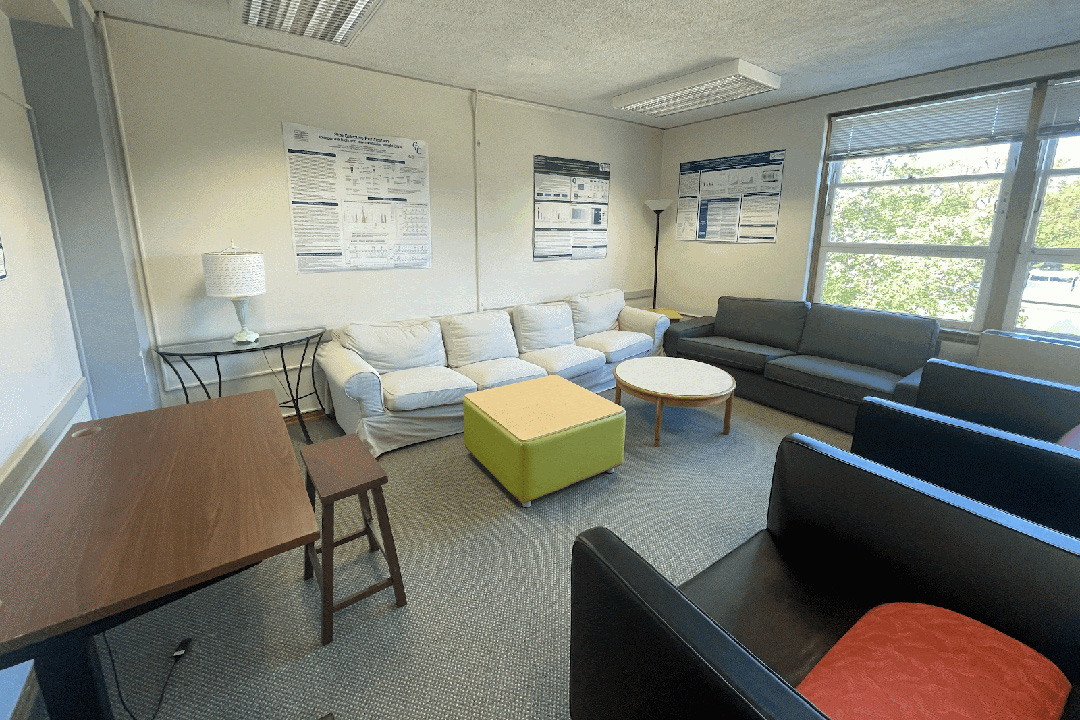
We're excited to announce our brand-new student lounge exclusively for students in the Department of Forensic Sciences. Designed as a welcoming and versatile space, the lounge serves as a hub for socializing, networking and collaborative study. Whether you’re looking to connect with peers between classes, work on group projects or unwind in a supportive environment, this space was created with our students in mind. The lounge will also serve as the central meeting place for the Forensic Student Guild, hosting regular meetings and social events that strengthen our vibrant academic community.
Retirements
Celebrating the Legacy of Dr. Walter F. Rowe

After nearly five decades of extraordinary service to the forensic science community and to our department, we are honored to recognize Dr. Walter F. Rowe as he transitions into retirement from his faculty role. Dr. Rowe’s impact on the field and on generations of students and colleagues is immeasurable.
Dr. Rowe has been a cornerstone of our department, serving as chair in the past and dedicating almost 50 years as a professor of forensic sciences at GW. His academic journey began with a BS in chemistry from Emory University, followed by a master’s and PhD in chemistry from Harvard University. Before joining GW, he served in the U.S. Army crime laboratory system as a forensic drug chemist and serologist, and even participated in high-profile investigations such as the Fort Bragg murders.
Throughout his career, Dr. Rowe has graduated hundreds of students and mentored numerous faculty members, shaping the future of forensic science education and practice. He is a Fellow of the American Academy of Forensic Sciences, a former editorial board member of the Journal of Forensic Sciences and an active contributor to ASTM Committee E30, which sets critical standards for the discipline. His collaborations with organizations like the Innocence Project and his authorship of chapters in popular forensic science textbooks underscore his influence on both the academic and applied aspects of the field.
While Dr. Rowe is retiring from his formal faculty role, we are thrilled that he will continue to contribute to our department by mentoring students and supporting research efforts. His dedication, expertise and passion for forensic science will remain an enduring part of our community.
Please join us in expressing our deepest gratitude to Dr. Rowe for his decades of leadership, scholarship and mentorship. His legacy will continue to inspire us for years to come.
Honoring Dr. Ira Lurie’s Contributions

We are proud to celebrate Dr. Ira Lurie as he retires from his faculty role after more than a decade of dedicated service to our department. Dr. Lurie has been an invaluable member of our academic community, sharing his expertise and passion for advancing forensic science while mentoring countless students.
Dr. Lurie joined our department after an extraordinary 40-year career with the U.S. Drug Enforcement Administration, where he pioneered advanced liquid phase separation methods for seized drug analysis. His academic credentials include a PhD in chemistry from the University of Amsterdam under the guidance of Peter Schoenmakers. Over the years, Dr. Lurie has authored more than 90 peer-reviewed articles and book chapters and co-edited the influential book High-Performance Liquid Chromatography in Forensic Chemistry. His research has focused on developing novel separation and detection techniques for drug analysis, significantly shaping the field.
A Fellow of the American Academy of Forensic Sciences (AAFS), Dr. Lurie received the prestigious Paul L. Kirk Award in 2015—the highest honor from the AAFS Criminalistics Section—recognizing his outstanding contributions to forensic science.
While Dr. Lurie is stepping back from his formal teaching role, we are thrilled that he will continue to stay engaged with our department’s research efforts, mentoring students and contributing his unparalleled expertise to ongoing projects.
Please join us in expressing our deepest gratitude to Dr. Lurie for his years of service, leadership, and innovation. His legacy of excellence will continue to inspire future generations of forensic scientists.
Department Kudos
- The GW Forensic Science faculty and students had an outstanding year of research and professional engagement. Our faculty presented at leading national and international conferences, published in top journals and led influential committees and working groups. Students were deeply involved, delivering 14 presentations at the AAFS annual meeting and participating in prestigious events such as the Gordon Research Conference. From cutting-edge work in forensic genetics and chemistry to advancements in latent print and molecular biology, these collaborations showcase our department’s commitment to advancing the field while providing students with unparalleled research opportunities.
- Special kudos to Dr. Heidi Eldridge for her hard work and vision in developing and securing approval for the new Graduate Certificate in Latent Print Examination, which will launch next academic year. With more than 11 years of experience as a forensic scientist in latent prints, crime scene analysis and controlled substances—and as a leading researcher in fingerprint comparison validity and forensic communication—there could be no one better suited to design this program. Dr. Eldridge’s expertise and dedication ensure that this certificate will set a new standard for excellence in forensic education. She was profiled in the CCAS Spotlight newsmagazine.

Annika Myshak (left) and Haley Jensen Annika Myshak, BS ’23, MFS ’24, and Haley Jensen, MFS ’24, recently graduated from the Drug Enforcement Administration’s rigorous 18-week Basic Forensic Chemist Course at Quantico, Va.—an achievement that marks a major milestone in their forensic careers. Both alumni excelled in the program, with Jensen earning the distinction of class valedictorian. Their success reflects not only their dedication and resilience under pressure, but also the strong foundation they received from the Department of Forensic Sciences at GW’s Columbian College of Arts and Sciences.

Alumni Class Notes
- Gillian Barnard Ruppert, MS ’02, has been a naval criminal investigative service special agent for 22 years. She is currently the assistant special agent in charge of criminal investigations/operations at the Northeast Field Office in Newport, R.I.
- Philip Hannum, MA ’81, has been blogging on substance abuse, especially Fentanyl, since 2016. He updated his knowledge after reading Julian's 13 Edition of A Primer of Drug Action.
- Jeffrey Miller, MS ’99, after publishing his book, A Life of Death—The True Story of a Crime Scene Detective, has retired to Southport, N.C. He plays golf and occasionally travels to London, his favorite place.
- Alison Morris, MS ’99, has been employed at the Centre of Forensic Sciences, located in Toronto, Ontario, Canada, since 2001. She recently returned to her role as a forensic biologist, after completing a contract as a scientific training coordinator.
- Derek Walley, MS ’00, lives in San Diego and works as a high school math and physics teacher. He is an avid English Premier League fan.